Beyond the rainbow flag: building a welcome people actually feel

.svg)
.svg)
.svg)
.svg)
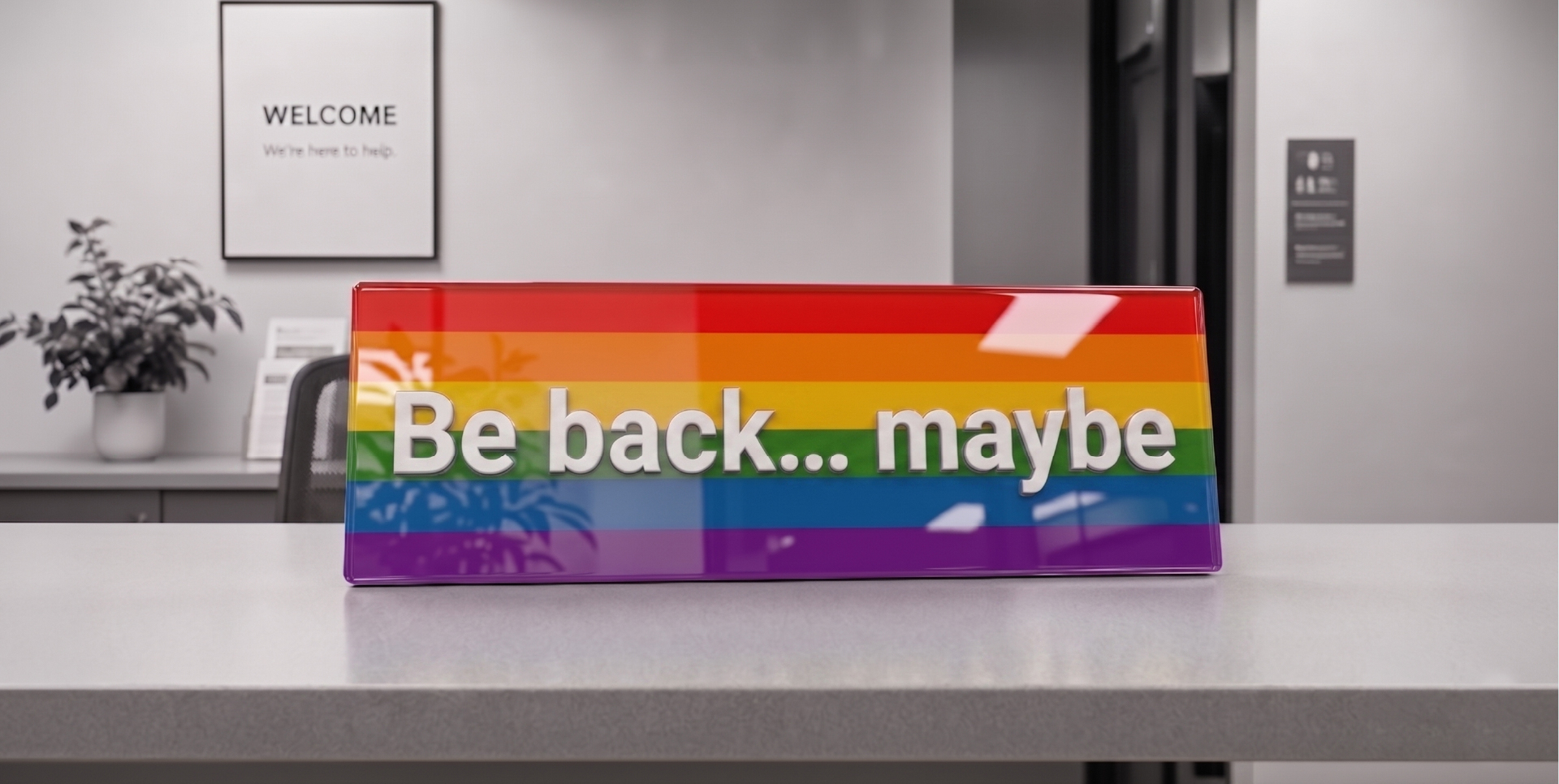
Every June, rainbow flags go up. Logos turn technicolor, social feeds fill with words of inclusion and many organizations, both for-profit and nonprofit, signal that LGBTQ+ patronage is warmly welcome. That visibility matters.
But a flag and targeted marketing shouldn’t be empty gestures. They’re a form of promise, and a promise is only as good as what stands behind it.
So here’s a question to sit with this Pride Month: When someone takes your organization up on a Pride-propelled invitation and walks through your door, does the welcome experience match the messaging?
It can be too easy to market a welcome you haven't built
Imagine an organization that decides to connect with a community it hasn't served well before. It puts real effort into the outreach – the imagery and messaging – and new demographic groups start to show up. Then comes the part that often has not been as thoroughly planned for: the environment waiting for the new arrivals.
An unfortunate disconnect
This usually isn't cynical, since the intentions are genuinely good. It might simply be a sequencing problem, where the marketing got ahead of the groundwork. But it might also be an incomplete understanding of what it means to put people at ease, a disconnect between wanting everyone to feel at home and the reality of what credibly ensures that feeling.
“You can't state with certainty that you're welcoming to 'everyone' unless you've deliberately considered who 'everyone' is," says Roni Weiss, Executive Director of Travel Unity, a nonprofit that helps the travel industry put inclusive practices into action through standards, education, certification and community-building. “Backing up that statement requires both a general understanding of the needs and experiences of different groups and thoughtful consideration of how those groups will experience your products, services and spaces.”
High stakes for nonprofits
The communities a nonprofit invites in are often the same it exists to serve. When members of a marginalized group show up to a promised safe space, only to notice things, large and small, that can be triggering, they don’t just leave quietly disappointed. They may be missing out on services they genuinely need. The trust your mission runs on is the very thing hollow hospitality can deplete.
Where the welcome gets real
That deliberate consideration Weiss describes has to land somewhere specific. In practice it comes down to three things: the people you put in front of newcomers, whether their behavior matches your message and whether your space is built for everyone who might walk into it.
Your staff and volunteers are the welcome
You can decorate a space beautifully and still get this wrong, because the welcome was never the decor. It's the people: the volunteer at the front desk, the staffer on the phone, the hosts of your event. They are what a newcomer actually experiences.
A rainbow flag with untrained staff and volunteers beneath it won't turn into a lasting relationship. Sensitivity and awareness training gives the people on the ground what they need to meet a community's real needs: using the right names and pronouns, recognizing which questions are intrusive, knowing how to proceed when unsure instead of guessing or freezing. None of this is complicated, but none of it happens by accident. It has to be taught and then practiced.
Watch for the gap between message and messenger
Sometimes the contradiction isn't an empty space; it's an active one. Picture an organization that markets to a community of color while someone representing that organization treats with suspicion the very visitors walking in, following them, watching them, implicitly questioning whether they belong. The outreach says, "You're welcome here." The interaction says the opposite. And the interaction is what is remembered every time.
This is where bias, implicit and explicit, does its damage. It shows up in who gets greeted warmly and who gets watched, who gets the benefit of the doubt and who gets a second look. Training helps. So does paying honest attention to the experience different demographic groups actually have with your organization, especially those your inclusive messaging is working hardest to attract.
Build for access, not just attendance
A welcome that only works for some bodies isn't a full welcome. Physical and sensory accessibility is part of the groundwork, not an extra you bolt on later:
- Step-free routes and ramps, so getting in the door isn't the first barrier
- Lighting that avoids strobe effects, which can trigger seizures
- Captioning, sign language interpreting and/or other assistive tools for videos and live events
- A quiet or lower-stimulation space at busy gatherings
- Clear, readable signage that lets everyone find their way without having to ask
The goal is simple. Nobody should have to be the exception you scramble to accommodate at the last minute. Plans should account for all needs.
Look honestly, then keep looking
You don't have to fix everything at once. You do have to look honestly. Walk through your own organization as if you were a first-time visitor from each of the communities you hope to reach. Better yet, don't guess, ask. Invite the participation of people you want to welcome. Better than an internal review, they can help you identify if and where things break down.
Treat this as an ongoing task, not a one-off box check. Staff turns over, events change, communities grow and shift. A welcome system is initiated once but maintained continually.
The flag should tell the truth
Pride Month is a fine time to raise the rainbow flag. It's an even better time to make sure the flag tells the truth. The organizations whose welcome holds up after the visitor walks in – in June and every month after – turn a month of visibility into lasting relationships.
At Give Lively, we build free fundraising technology for nonprofits with a related principle in mind: tools should be accessible and people-centered by design, so nonprofits can spend less on software and more on the work, and the welcome, that serves their communities.
Give Lively also places special significance on the purpose and safety of the space we share with our member nonprofits and their donors. Use of our tech is guided by our publicly stated values and support for nonprofits that make the world a better place by elevating marginalized voices, striving to meet the needs of the underserved, imagining an inclusive future for their communities and advocating for equality. We personally review every membership application to ensure a nonprofit’s alignment with our values.
If that's what you're building toward, see what free membership includes.
%201.svg)