Collective action: the engine behind women's history and modern fundraising

.svg)
.svg)
.svg)
.svg)
More than 200 years before Women’s History Month began, Abigail Adams shared an early feminist warning with her husband, John Adams, as he took part in founding the United States of America. She asked him to “remember the ladies and be more generous and favorable to them than your ancestors. Do not put such unlimited power into the hands of the husbands. Remember, all men would be tyrants if they could. If particular care and attention is not paid to the ladies, we are determined to foment a rebellion, and will not hold ourselves bound by any laws in which we have no voice or representation.”
Today, women do have a far stronger voice than in Abigail Adams’ time, but equal representation hasn’t been fully achieved and women’s rights are being threatened daily.
- The 19th Amendment of the U.S. Constitution, guaranteeing a woman’s right to vote, was only ratified in 1920 by a one-vote margin.
- Women couldn’t permanently serve in the regular Army, Navy, Air Force and Marine Corps until 1948.
- In 1967, Kathrine Switzer was the first woman to run the Boston Marathon with an official number. She finished the race, despite facing a mid-course physical attack by the race director.
- Education was only recognized as an equal right to all when Title IX was passed in 1972.
- A woman couldn’t open her own bank account without her husband’s signature until the Equal Credit Opportunity Act of 1974.
- The federal government did not require women to be included in federally funded medical research until 1993.
- Today, women make up only 28% of the United States Congress, the highest percentage in U.S. history, but far below the 51% share of the population.
- The Equal Rights Amendment, first proposed in 1923, has never passed.
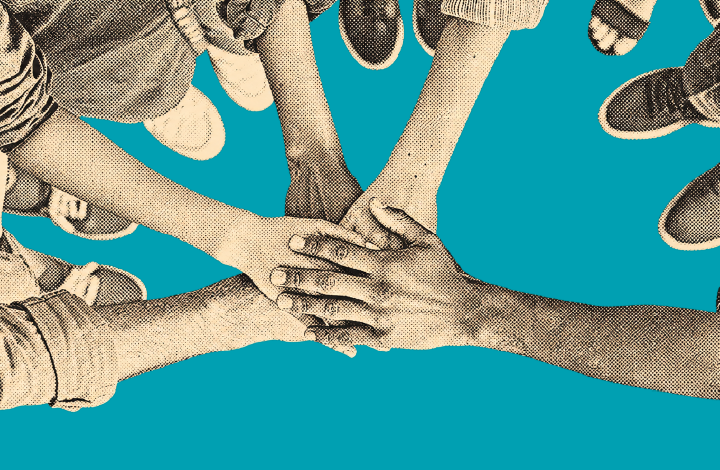
Every hard-won advance for women's rights required people to organize, recruit, persuade and persist together. The right to vote took 72 years and generations of activists. Title IX required decades of advocacy from educators, athletes and lawmakers working in concert. That spirit of organized, collective action didn't end with any single legislative victory. It's alive today, and for nonprofit professionals it's one of the most powerful fundraising forces available.
Collective action, then and now
There’s still a long way to go. And yet, Women's History Month, officially designated in 1987, is a good time to pause and ask: How did the change actually happen? The answer is: It didn't happen all at once or without a lot of help.
The organizing traditions that powered the women's suffrage movement, the labor movement and the Civil Rights Era were built on a simple but radical idea: that individuals, connected by a shared cause, can move mountains. As Abigail Adams warned her husband, women worked together. Women gathered in church basements, passed petitions door to door and pooled small contributions to fund newspapers, legal battles and organizing campaigns. The tools were humble. The results were not.
For nonprofit fundraisers, that is an important lesson. The logic and power of collective action is alive and well today, energizing the heart of peer-to-peer fundraising for nonprofits.
What collective action actually looks like
When historians trace the arc of the women's rights movement, they don't find a single heroine with a megaphone. They find networks. Harriet Tubman didn't just free herself; there was a web of abolitionists and safe-house keepers. And she went back dozens of times with support from ordinary people who, against all odds, said yes when she asked for help. The suffragists, who finally won the right to vote in 1920, built on years of organized effort, many local chapters and the labor of women whose names never made the history books.
This is what collective action looks like in practice: a lot of people, each doing something relatively small, combining their acts to make something huge possible.
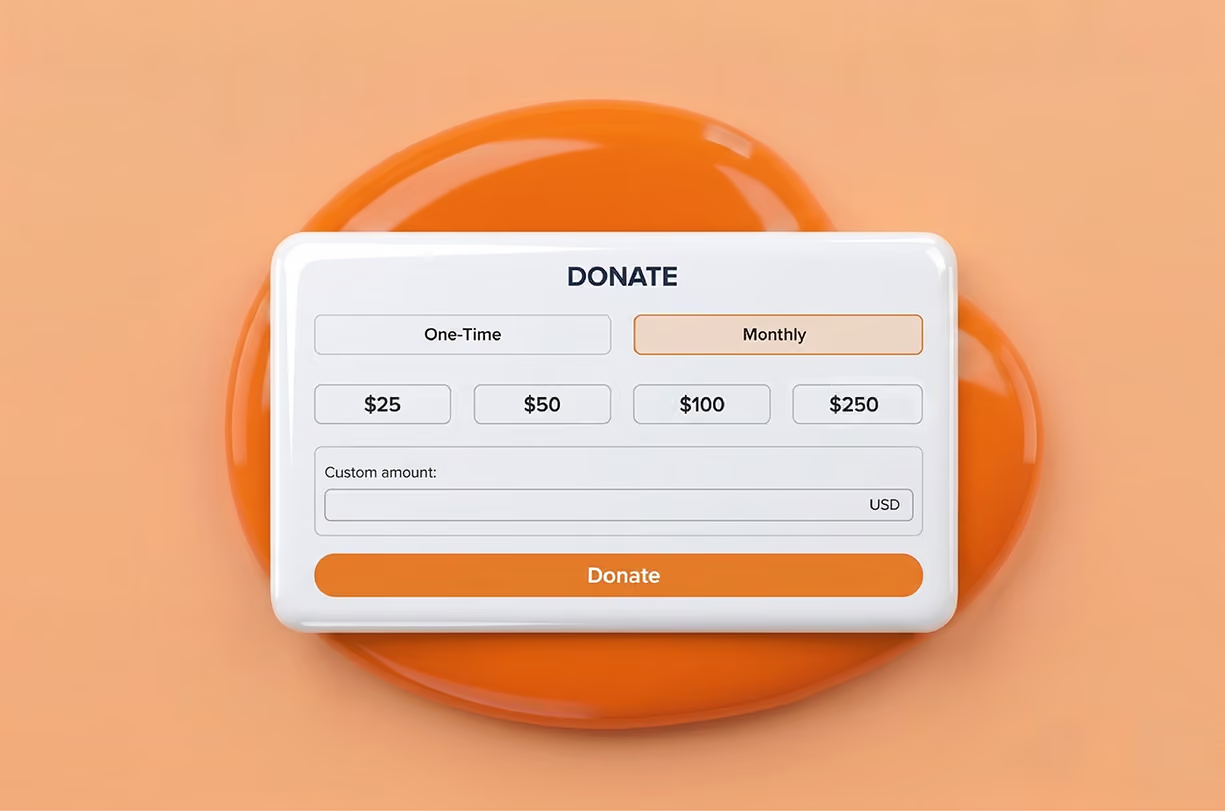
For nonprofit fundraisers, this is worth contemplating. A $25 donation is not a consolation prize. The donor might be someone who can reach 40 people who have never heard of your organization. Her network is just as important an asset today as it was in the past.
Peer-to-peer fundraising as a modern organizing tool
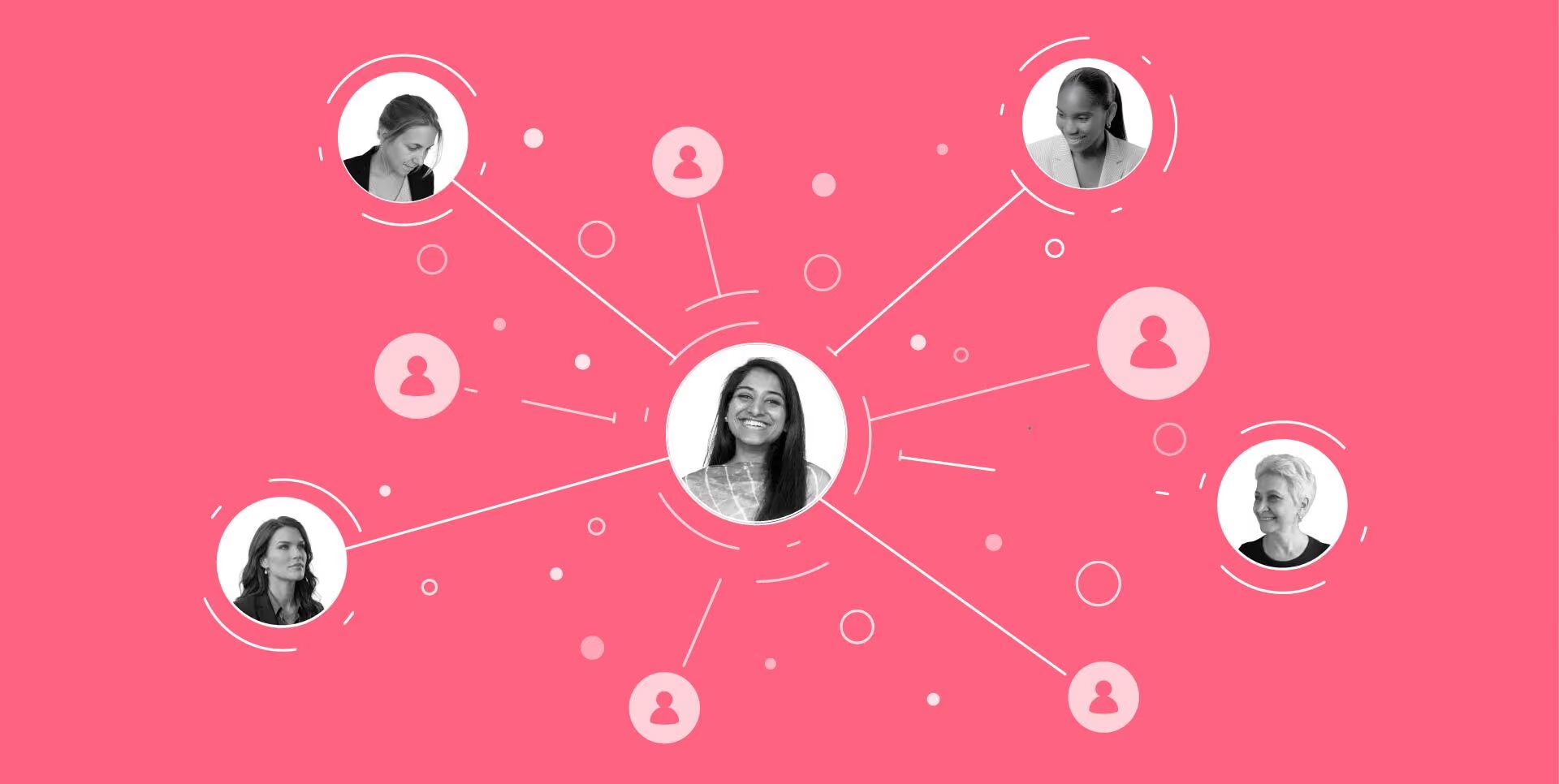
Give Lively's Peer-to-Peer Fundraising product is, at its core, a collective action machine. It lets your most passionate supporters do what they were already going to do anyway: talk about your work. The difference is that now, when they talk, they also provide a direct path to giving.
Instead of a single campaign page, you get dozens of them, each personalized by an individual fundraiser telling her own story about why your mission matters. A board member shares her page with her colleagues. A program participant sends it to her neighbors. A longtime volunteer posts it to a community Facebook group. Independently, each of these efforts is modest. Together, they extend far beyond what a typical marketing budget buys.
This mirrors how social movements have always spread: through trusted messengers carrying inspiration to their circles, not through top-down broadcasting. When Dolores Huerta organized farmworkers in the 1960s alongside Cesar Chavez, she went community by community, building trust one conversation at a time. The United Farm Workers Association didn't grow through advertising; it grew through relationships.
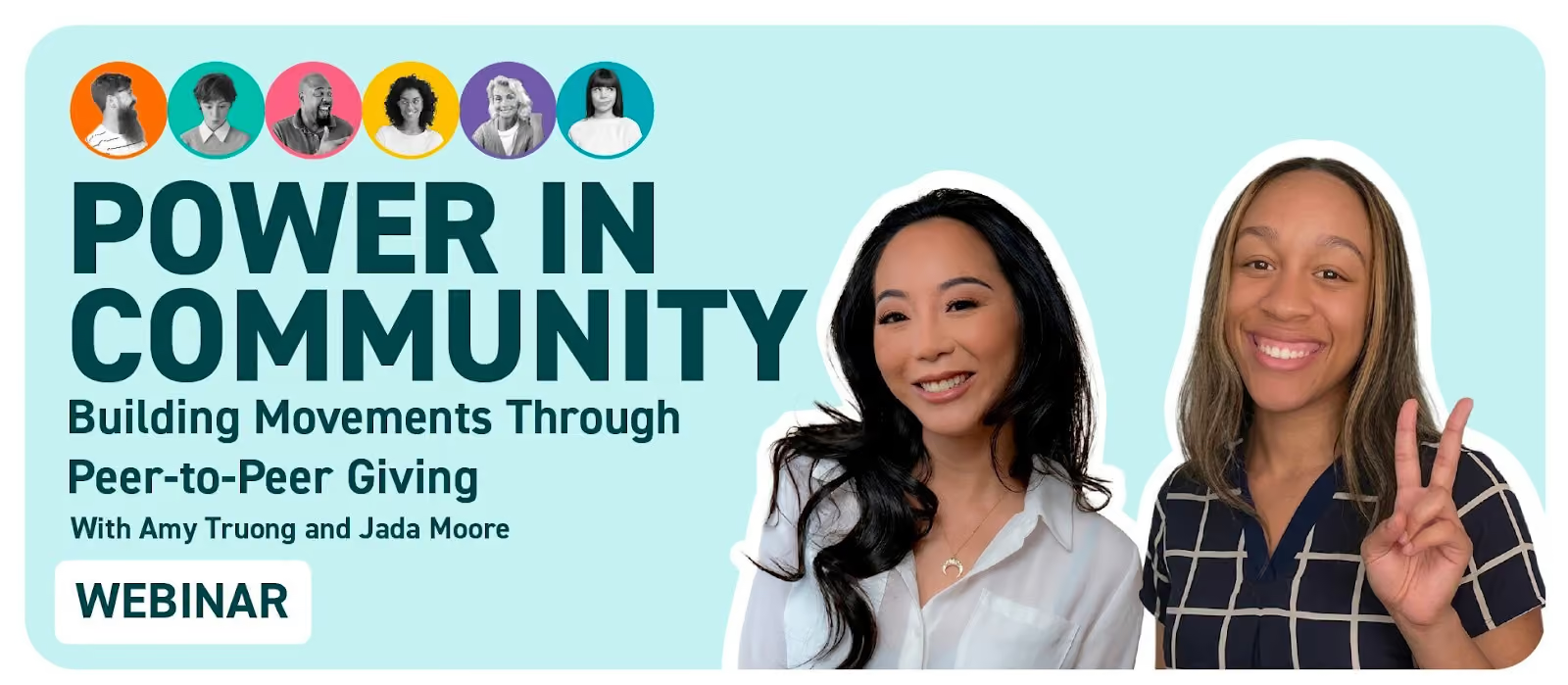
On-demand webinar: learn about building movements through P2P giving
In this webinar replay, Amy Truong, Give Lively's Member Success & Growth Lead, and Jada Moore, Give Lively's Senior Solutions Architect, walk you through the nuts and bolts of building a peer-to-peer fundraising strategy that actually moves the needle.
They cover:
- Getting started: How to structure a peer-to-peer campaign for your specific goals, whether you're running a time-bound fundraising drive, a community challenge or an ongoing awareness effort
- Motivating your fundraisers: The tactics and tools that keep individual fundraisers engaged, from leaderboards and team goals to personalized thank-you notes and real-time progress tracking
- Making it scalable: How to manage peer-to-peer campaigns without overwhelming your staff, including how Give Lively's Peer-Based Fundraising solution handles the heavy lifting automatically
- Turning participants into long-term supporters: How to nurture the relationships you build through peer-to-peer campaigns so that first-time fundraisers become loyal advocates year after year.
If you've been curious about peer-to-peer fundraising but weren't sure where to start, or if you've tried it before and want to do it better, this webinar is for you.
What this means for fundraising campaigns
If you're planning a campaign, consider building it with the lessons of collective action in mind. Invite your donors to become fundraisers but treat them as community activists.
You might be surprised who steps up. Peer-based fundraising campaigns, whether they’re centered around Peer-to-Peer Fundraising pages or full Team Fundraising initiatives, consistently identify new donors: friends of friends, community members with shared values. These are exactly the kinds of relationships that sustain an organization over the long haul.
Women's History Month is a celebration, but it's also a reminder. The progress we mark every March was earned through coordination, persistence and the willingness to ask others for help. For fundraisers, that's not just a history lesson. It's a playbook.
%201.svg)