Small-dollar donor retention: why these donors are worth keeping




When confronted with a long to-do list and not enough hours in a day, nonprofits sometimes write off small-dollar and micro donors as a lost cause. Their numbers keep shrinking, they cost real time to steward and a $15 gift doesn't impact a budget the way a five-figure check does. So when resources are tight, it can make sense to focus retention energy on major donors instead.
However, deprioritizing micro and small donors carries real risk, especially for small nonprofits. In a survey of nearly 4,000 U.S. nonprofits, Candid found that the smallest organizations were far less likely to receive government funding (16.9% compared with 78.2% of the largest) or foundation grants (63.2% compared with 95.6%), while 93.2% of them received funding from individual donors. With fewer alternatives to fall back on, a drop in individual donors may be harder for the smallest organizations to absorb.
To help with the decision about whether to target smaller donors, this guide reviews what current data shows about them and how to improve retention strategies when targeting them.
Key takeaways
- Micro- and small-donor counts have declined for several years, but micro donors were the only group whose retention rate ticked up in Q1 2026.
- Giving frequency predicts donor retention better than gift size does, with retention climbing from 7.4% for one-time donors to 88.1% for donors with seven or more gifts.
- Acquiring a new donor costs more than retaining an existing one, regardless of gift size.
- Major-donor retention tactics, like personal calls and one-on-one meetings, don't scale to the volume of small-dollar gifts, so these donors need an automated alternative.
- Converting a donor's first gift into a second gift is the most consequential step in building long-term small-dollar donor support.
What does the data say about small-dollar and micro-donor retention?
The number of micro and small donors has fallen for several years, but micro-donor retention edged up while retention slipped in every other donor group.
The primary data source here, the Fundraising Effectiveness Project (FEP), tracks giving in size bands: Micro ($1–$100), Small ($101–$500), Midsize ($501–$5K), Major ($5K–$50K) and Supersize ($50K+).
According to FEP, the number of Micro and Small donors (i.e., how many people in each band are giving at all) has been declining for a while. The Q4 2024 report found donors giving under $100 fell 8.8% year over year. By Q1 2025, that tier's donor base had shrunk another 11.1%. The pace of decline eased through 2025, but Q3 2025 still showed a 10.3% drop compared to 12.4% the year before. Micro was the only donor segment still losing donors in Q1 2026, while Small, Midsize, Major and Supersize all grew.
However, recent data on donor retention rates (i.e., the share of past donors who keep giving) adds nuance. FEP's Q1 2026 report found Micro donors were the only tier where retention improved year over year, up by 0.1 percentage points, though at 10% the retention rate remains the lowest of any tier. Small, Midsize, Major and Supersize donors all saw retention dip a bit that same quarter. Of course, one quarter of data isn’t a trend, but it suggests micro donors aren’t the lost cause some nonprofits treat them as.
What the data makes clearer is that giving frequency, not gift size, is a strong predictor of whether a donor sticks around. FEP's retention by donation count shows that a donor’s second gift more than doubles the retention rate, from 7.4% to 19.4%, and goes even higher for donors with three to six gifts (44.6%) and seven or more gifts (88.1%). A donor who gives $20 seven times is a far better retention bet than a donor who gives $500 once. (It’s worth noting that FEP appears to sort donors into segments by how much they give over the year, so a $20 donor who gives seven times moves up from Micro to Small. That could help explain why Micro retention looks low: the donors who give most often graduate out of the tier.)
Many long-term donors start with a small first gift and keep giving from there. Nonprofits that pivot away from small-dollar donors risk cutting off the pipeline that produces reliable supporters.
Why small-dollar and micro donors merit the retention effort
Acquiring a new donor costs more than keeping an existing one. This math doesn't change when a gift is small. A donor who starts at $10 or $15 isn't locked into that amount forever. Many donors begin with a small, low-pressure gift and increase their giving as their earning power rises and their relationship with an organization deepens.
There's also a resilience argument for targeting small-dollar donors. A fundraising base of a handful of major donors is vulnerable if even one of them shifts priorities. A broader base of smaller, loyal donors spreads that risk.
This sort of base is harder to rebuild than it looks. Household donation rates fell from 66% in 2000 to roughly 47% by 2020, an estimated 20 million households leaving the donor pool over two decades. Losing a small-dollar donor can mean losing a household that won't necessarily be replaced.
Small-dollar and micro-donor retention strategies that work
A prompt, specific thank-you that shows donors where their money went is a baseline retention practice that applies to every donor. Beyond the basics, smaller donors can require tactics that look different from the ones used for major-gift cultivation.
Here are five strategies for keeping micro and small-dollar donors.
1. Automate donor engagement instead of trying to personalize it at scale
Major-donor cultivation relies on phone calls, in-person meetings and written notes, among other things. This approach doesn't scale to hundreds or thousands of small gifts. Trying to force it can mean it happens inconsistently or not at all.
A more realistic approach is an automatic, segmented communication sequence that uses tenure or gift patterns as triggers. With this setup, every small-dollar donor receives a consistent, relevant touchpoint without one-to-one staff time devoted to each gift.
2. Introduce a monthly giving program at the moment of the first small gift
Converting a first-time donor into a second-time donor is the most consequential step in building long-term donor support. As shared earlier, FEP’s retention by donation count data shows retention more than doubles from 7.4% for one-time donors to 19.4% for two-time donors. FEP’s Q1 2026 strategic insights point to the same window, suggesting that organizations should consider converting new donors into monthly sustainers through the initial offer or immediate post-giving stewardship.
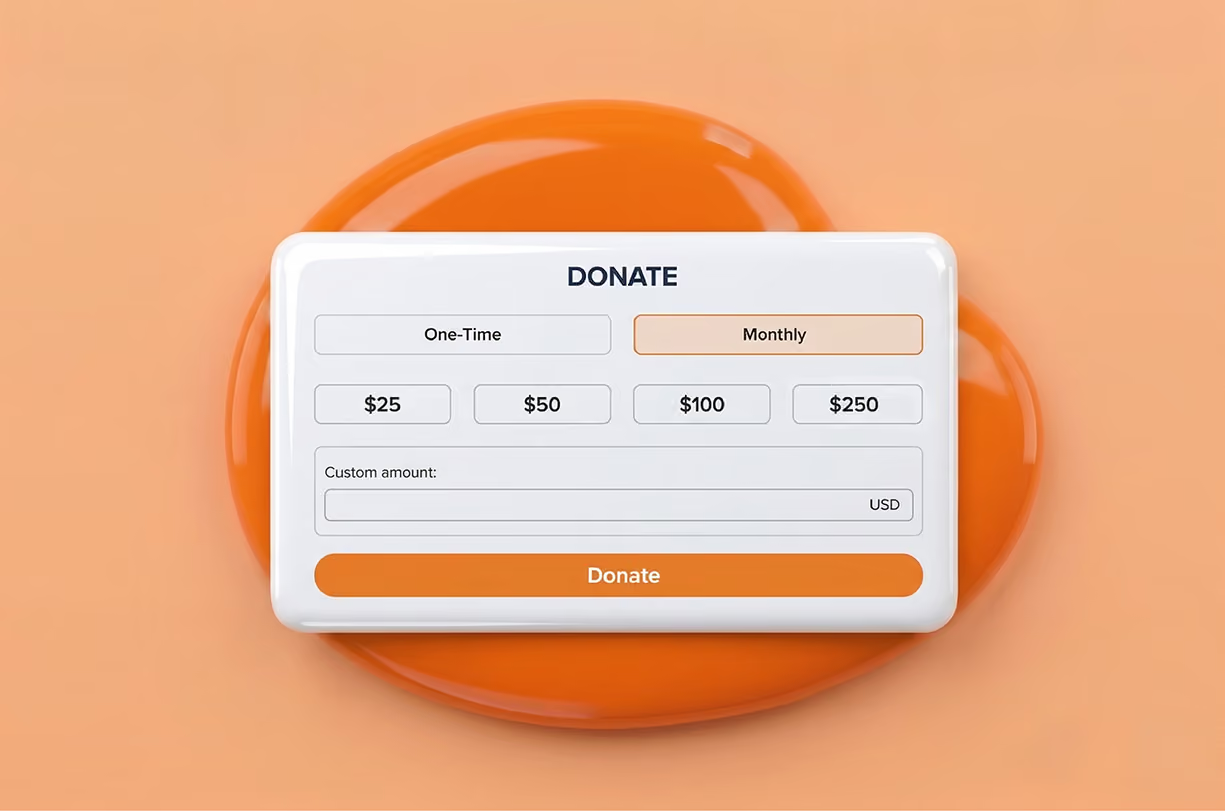
A modest recurring option offered alongside a one-time gift is one way to do that. The “ask” can match what the donor already gave – an extra $5 or $10 a month rather than a major-gift-sized figure.
3. Catch payment failures before they turn into donor attrition
Small recurring donors may lapse without ever deciding to stop. An expired card or a declined charge can quietly end their giving unless something catches it.
A simple reminder for donors to update payment details – and for staff to follow up – can recover donors who never intended to stop giving in the first place. Fixing failed payments addresses a different problem than communicating more, so the two can work side by side.
4. Tie campaign goals to donor count, not just dollar totals
A dollar-based campaign goal can make a $25 gift feel like a rounding error. A donor-count goal does the opposite; it puts every gift on equal footing, regardless of size.
Framing a goal as "500 donors" rather than "$50,000" gives small-dollar donors a clear, visible reason their gift matters. It also pairs well with a stretch incentive, like a bonus gift unlocked once a donor-count threshold is hit, which turns participation itself into the win condition.
Cathedral Arts Project's GivingTuesday campaign put this into practice by centering its goal on reaching 100 donors. Once the threshold was hit, it unlocked an additional $5,000 gift, exceeding its dollar goal in the process.
5. Re-engage lapsed donors with a low-friction ask
A full win-back campaign designed for a major donor isn’t suitable for a $10 gift, and treating it that way can feel out of proportion to the amount. A short message that notes what's changed since a donor’s last gift and offers an easy way to give again works better than an elaborate outreach sequence for this segment.
Give small-dollar donors a reason to keep giving
Retention for small-dollar and micro donors comes down to making it easy for people to keep supporting a cause they've already said yes to once. Give Lively's fundraising platform is free for nonprofits and supports that with built-in recurring giving options, donation forms that make it simple to set donor-count campaign goals and automatic, customizable donation acknowledgments that help nonprofits stay in touch with donors without adding to a team's workload.
To learn more about the Give Lively nonprofit fundraising platform and see how it can help with small-dollar donor retention, sign up for a live platform demo.