Why giving days matter for nonprofits and how to choose the right ones
.svg)
.svg)
.svg)
.svg)

The yearly calendar is filled with “giving days” that create urgency around nonprofit fundraising and awareness. They range from global dates like GivingTuesday to newer entries devoted to donor-advised funds or estate planning.
For an organization deciding how to focus limited staff time and capacity, taking advantage of giving days is appealing; however, the number of options may be more overwhelming than helpful. Understanding why giving days work and which ones align with mission and donor base makes those decisions easier.
This guide looks at the case for giving days, walks through several worth knowing and offers a framework for choosing which ones deserve a place on a nonprofit's fundraising calendar.
Key takeaways
- Giving days concentrate fundraising and donor attention around a shared date tied to a specific cause or occasion.
- GivingTuesday alone generated an estimated $4.0 billion in the US in 2025, and nonprofits received about 4% of their entire year's online revenue on December 31.
- Giving days now range from GivingTuesday and National Philanthropy Day to newer entries like DAF Day and TogetherTuesday.
- Many organizations also build their own signature giving days rather than relying solely on nationally recognized dates.
- The right giving days for any nonprofit depend on mission alignment, donor readiness and fundraising goals.
What are giving days?
A giving day is a fundraising engagement event that typically runs for 24 hours, during which nonprofits and donors rally around a specific cause or occasion.
Giving days come in all sizes and scopes – global, national, regional and local. Some are cause-agnostic and open to any organization, like GivingTuesday, which falls for all on the Tuesday after Thanksgiving. Others are cause-specific, tied to a mission area such as environmental protection or mental health services.
A third category exists at the organization level: individual nonprofits, colleges and community foundations that have established their own signature giving day around an anniversary or campaign.
Each type serves a different purpose, and a well-planned nonprofit fundraising calendar can include several of them.
Why giving days matter for a nonprofit’s fundraising efforts
Giving days work because they concentrate fundraising activity into a small window, turning scattered generosity into a collective moment that can be harnessed to boost donor attention beyond usual channels and levels.
The GivingTuesday statistics and data supporting this effect hold up at multiple scales, from single-day fundraising totals to long-term donor conversion rates:
- GivingTuesday drives billions in just one day: On GivingTuesday 2025, Americans donated an estimated $4.0 billion in the US alone, a 13% increase over the previous year, with roughly 38.1 million people participating through financial gifts, volunteering or spreading the word. Cumulative GivingTuesday donations since its 2012 launch have reached $22.5 billion.
- Community foundation giving days are growing: Research published in The Foundation Review shows community foundation-led giving days grew from two events in 2009 to 71 by 2022, with dollars raised climbing from an inflation-adjusted $6 million to $282 million over that period.
- Giving days convert new donors, not just gifts: Research from EAB determined that 12.7% of alumni donors to private colleges make their first gift on a giving day, with public colleges hitting 19.8%. This suggests that giving days work as a donor acquisition tool as much as a revenue generator.
Give Lively supplies data to the GivingTuesday Data Commons, which tracks these patterns across the sector.
What the data says before GivingTuesday 2026
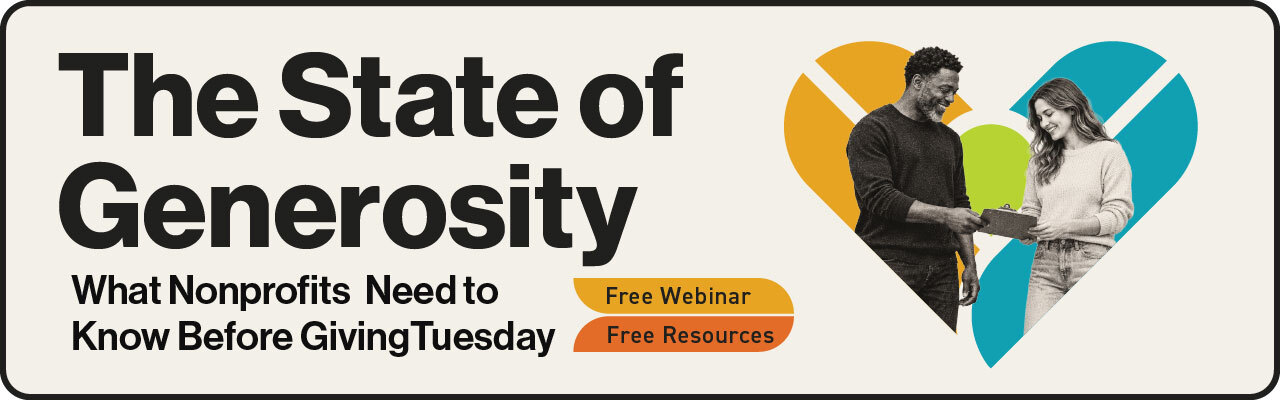
On October 22, Give Lively CEO David DeParolesa sits down with GivingTuesday CEO Asha Curran for The state of generosity: What nonprofits need to know before GivingTuesday, a free webinar about donor behavior, participation beyond financial gifts and the trust that keeps supporters engaged after a campaign ends.
Register for the free webinar, held 1:00–2:00 p.m. ET. Everyone who signs up receives the recording.
Which giving days are worth planning for?
The giving days below represent a mix of the best-known, the fastest-growing and the most specialized options active across the nonprofit sector:
1. GivingTuesday
GivingTuesday is held annually on the Tuesday following Thanksgiving. It remains the largest and most-recognized giving day worldwide, uniting individuals, nonprofits and businesses around a shared day of generosity.
Since it falls during the broader, post-Thanksgiving holiday giving season, many organizations treat it as the kickoff of a year-end fundraising push, not a standalone campaign. For campaign tactics, Give Lively's guide to running a GivingTuesday campaign covers planning, messaging and post-campaign follow-up.
2. DAF Day
Taking place on the second Thursday in October, DAF Day encourages donors to recommend grants from their donor-advised funds to the causes they support. Launched in 2024, the day has grown quickly, pacing broader DAF adoption.
Give Lively also helps nonprofits look at DAF Day and DAF mechanics in more depth, including how DAFpay works on donation forms.
3. TogetherTuesday
TogetherTuesday is a newer initiative from the GivingTuesday organization. Its timing in late June makes it a mid-year counterpart to the main event. It applies the same model – one coordinated day of generosity – to a period when nonprofit fundraising typically slows.
4. Other notable giving days
- International Day of Charity: Observed each September 5 in honor of Mother Teresa's death anniversary, this United Nations-designated day encourages charitable action and volunteering worldwide.
- National Nonprofit Day: Held in the US every August 17, National Nonprofit Day acknowledges the nonprofit sector's role in communities, with its date tied to 19th-century tax law that first extended exemptions to charitable organizations.
- National Philanthropy Day: Championed by the Association of Fundraising Professionals since 1986, this November 15 occasion, just weeks before GivingTuesday is a chance to publicly thank supporters ahead of December appeals.
- Give OUT Day: The national giving day dedicated to LGBTQ+-focused nonprofits, Give OUT Day is the first Thursday in June.
- Make-A-Will Month: Celebrated throughout August, this estate-planning action period gives nonprofits an opening to introduce planned giving conversations with donors.
5. Cause-specific giving days
- Earth Day: This global environmental commemoration each April 22 has become an anchor point for conservation groups running matching campaigns or awareness pushes.
- World Wildlife Day: An annual March 3 event, this United Nations observance highlights the importance of wild animals and plants, giving wildlife and conservation organizations a built-in moment for public engagement.
- World Mental Health Day: This WHO-recognized annual day on October 10 allows mental health nonprofits and advocacy groups to focus attention on fundraising and destigmatization efforts.
Dozens of additional cause-specific days exist across a wide variety of issue areas, from disability rights to disaster relief. They provide mission-driven nonprofits with dates on which to run campaigns, even without a broader giving-day movement behind them.
6. Special giving days nonprofits create themselves
Not every giving day originates from a national or international organization. Many nonprofits, community foundations, colleges and hospitals instigate their own signature giving days as part of an anniversary, a specific campaign or an otherwise quiet point on the calendar.
This approach requires more setup than joining an existing day, since the organization must build it from the ground up, but it also offers full control over timing, messaging and how closely the day is associated with the organization's own goals and community.
7. Year-end giving (December 31)
Unlike the other events shared above, year-end giving isn't an official, named giving day with a host organization behind it. But it is a well-documented pattern of giving during the final days of the calendar year. It consistently brings in significant revenue, often surpassing GivingTuesday totals.
According to M+R's 2026 Benchmarks study, nonprofits received about 4% of their entire year's online revenue on December 31 alone in 2025, driven largely by donors making last-minute, tax-deductible gifts. For nonprofits already running a GivingTuesday campaign, extending outreach through December 31 can capture this donor behavior directly rather than treating it as a separate effort.
How to choose the right giving days for your nonprofit
With so many giving days throughout the year, no single one belongs on every nonprofit's fundraising calendar by default. What fits well for one organization may add little value for another, depending on a handful of practical factors:
- Mission alignment: A giving day tied to an organization's cause, such as a wildlife nonprofit leaning into World Wildlife Day, resonates with donors more than a randomly chosen day.
- Donor base and digital capacity: High-competition days like GivingTuesday favor organizations with a strong email list and social following that can cut through crowded messaging. In contrast, less trafficked options, such as International Day of Charity or National Philanthropy Day, can give smaller organizations greater visibility and reduced competition.
- Fundraising goal: An organization focused on donor acquisition can prioritize signature or community foundation giving days, while one developing a legacy giving program can target Make-A-Will Month.
- Staff bandwidth: Joining an established day such as GivingTuesday or DAF Day takes far less setup than a signature giving day. Realistic bandwidth helps determine whether to participate in an existing day or create one.
It’s best to focus on one or two well-matched giving days each year, versus spreading limited resources across several of them.
Support every giving day with Give Lively's free fundraising platform
Whichever giving days a nonprofit chooses, the donation infrastructure behind them should stay consistent. Give Lively's fundraising platform is free for nonprofits and includes features for concentrated giving moments, such as individualized peer-to-peer campaign pages, donation matching tools and real-time reporting. Organizations can lean into one well-chosen giving day or settle on a broader calendar around several, using the same donation platform throughout the year.
Learn about Give Lively's features to see how they support giving days. Sign up for a free demo to see the full platform in action.
%201.svg)