Does your nonprofit need to register in California? Here’s what you need to know
.svg)
.svg)
.svg)
.svg)

Online fundraising is a core part of how nonprofits reach donors, build campaigns and keep revenue flowing. Your supporters probably give through a form on your website, an event page, a peer-to-peer campaign or a text-to-donate appeal, usually powered by a digital fundraising platform.
That reach is a powerful thing. But it means your organization likely needs to understand registration rules beyond those of your home state, most notably California’s.
If your nonprofit fundraises in California, receives charitable assets connected to activity in California or uses online platforms that reach California donors, you may need to register with the California Attorney General’s Registry of Charities and Fundraisers. Under California Assembly Bill 488 (AB 488), staying in good standing has become especially important for nonprofits that rely on online fundraising platforms.
Give Lively and Change are partnering to make the filing process easier for the California Attorney General''s Registry. Change provides charitable compliance and donation infrastructure, including tools that help nonprofits complete California charitable registration and renewal filings.
Free on-demand companion video
In a special conversation with Change about California charitable registration and compliance, we explored:
- Why California registration and good standing matter for online fundraising
- How to determine whether your nonprofit may need to register or renew
- How the Give Lively + Change experience simplifies the California filing process
- What to expect in terms of process, timeline and fees
- Answers to questions asked directly of the Change team
What is California charitable registration?
California charitable registration is the process of lodging your nonprofit with the California Attorney General’s Registry of Charities and Fundraisers.
The Registry oversees charitable organizations and fundraising activity in California. Its role is to support transparency, protect charitable assets and help donors access reliable information about organizations soliciting or holding charitable funds.
For many nonprofits, California compliance has two parts.
Initial registration
This is the first filing your organization completes with the Registry. The California Attorney General states that charitable organizations doing business or holding property in California must register within 30 days of receiving charitable assets, unless an exemption applies. Visit the California Department of Justice (DOJ) website for the state’s initial registration guidance.
Annual renewal
This is the ongoing report your organization files after initial registration. California charities generally file Form RRF-1 each year, along with required financial information and any applicable renewal fee. California’s annual renewal guidance is fully explained on the DOJ website as well.
The filing requirements can be manageable once you know what applies. The challenge is usually gathering the right documents, understanding which form is needed, navigating the state filing system and keeping track of renewal timing.
Who needs to register in California?
A nonprofit does not need to be based in California for California registration rules to matter.
If your organization solicits donations in California, receives charitable assets connected to California activity or fundraises through online tools that reach California supporters, you should review whether registration applies. That means a nonprofit incorporated in Virginia, Arkansas, New York or any other state may still need to evaluate California requirements.
There are some exemptions for certain categories of organizations. For example, religious organizations, educational institutions, hospitals and other entity types may be excused from registration or qualify for different treatment. Exemptions depend on the organization’s structure and activities, so it’s important to confirm your status rather than assume.
The main question, however, is where and how your nonprofit fundraises. The state in which your nonprofit was formed is only one part of the analysis.
If your team is unsure, start by checking your organization’s status in the California Registry and reviewing the Attorney General’s guidance. You should also always speak with qualified legal counsel or a compliance partner.
What is California AB 488 and why does it matter?
AB 488 is California’s law governing online charitable fundraising platforms. It created rules for platforms that enable charitable giving online, including crowdfunding tools, donation pages, customer donation programs and other digital fundraising experiences.
For nonprofits, the practical takeaway is simple: your California registration status can affect your ability to fundraise online.
Under California’s rules, charitable fundraising platforms must consider whether charities are in compliant. If your organization is required to register in California and falls out of good standing, that may affect whether platforms can continue listing your nonprofit, soliciting donations for you or sending funds to you.
For nonprofits using Give Lively, this is critical. Staying registered and current helps protect your ability to keep fundraising through the platform. (Read more about the turbulent rollout of AB-488 and how it affected Give Lively nonprofits.)
California is part of a broader trend. Hawaii has adopted similar charitable fundraising platform rules that take effect in 2026, and other states may be watching how these laws develop. Online fundraising is becoming more connected to registration status, good standing and platform eligibility. You can read a comparison of California AB 488 and Hawaii SB 1048 here.
What happens if you do not register?
If your nonprofit is required to register in California and does not, your organization may receive notices from the state, owe late fees or penalties, be identified as “delinquent” or lose good standing.
The fundraising impact is important. In some cases, an online platform (like Give Lively) may need to stop listing your nonprofit and/or pause donation activity until the issue is resolved.
That can limit your fundraising potential.
It can also create more work later. Resolving a lapse may require back filings, additional review, state notices and internal coordination. Staying current is usually much easier than correcting an issue after it affects your fundraising. And it helps protect your ability to fundraise online.
How Change simplifies the process
Give Lively and Change are working together to give nonprofits a simpler way to manage charitable registration and renewals with the California Attorney General's Office. This service is not currently available for the California Franchise Tax Board.
Due to California's rollout of a new renewals portal this month, the Change tool is, at present, available only for initial registrations. For immediate notification once the renewal process is up and running, please begin the Change application and join the waitlist.
Instead of navigating California forms and filing workflows on your own, your organization can use a guided filing experience powered by Change.
The process is designed to be straightforward.
Step 1: Complete one centralized questionnaire
Your team provides the information needed for your California filing in one place.
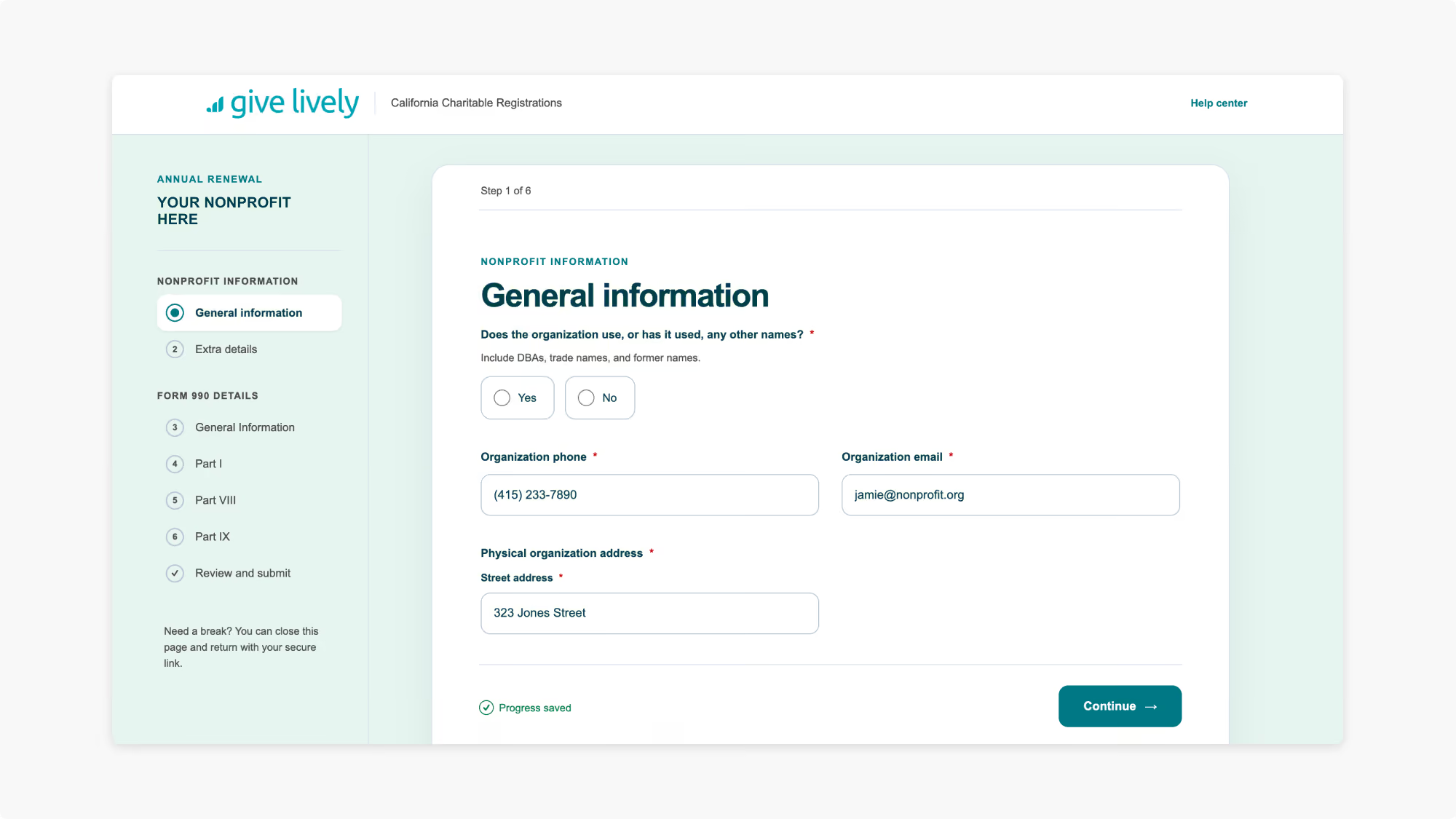
Step 2: Change prepares and manages the filing workflow
Change uses your information to prepare the filing, review it for completeness, support submission and provide status updates along the way.
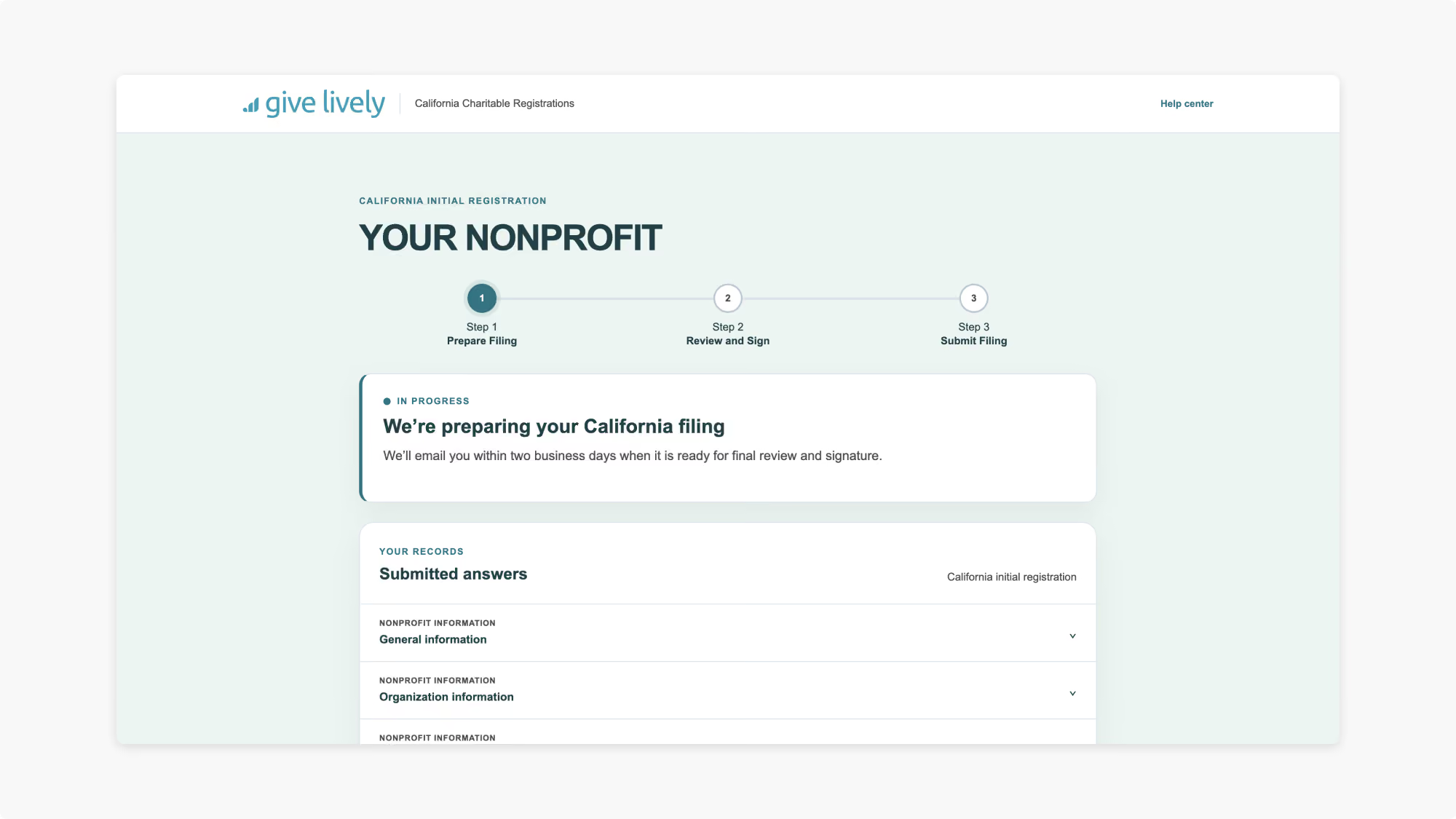
This helps remove the most time-consuming parts of the process: figuring out what information is needed, translating that information into the right filing fields, tracking progress and keeping tabs on next steps.
Start Your California Registration with Change
What does it cost?
- Change’s California charitable registration solution is $200 per filing, plus applicable California state filing fees.
- For initial registration, the California filing fee is $50.
- For renewals, California state fees are based on your nonprofit’s total revenue:
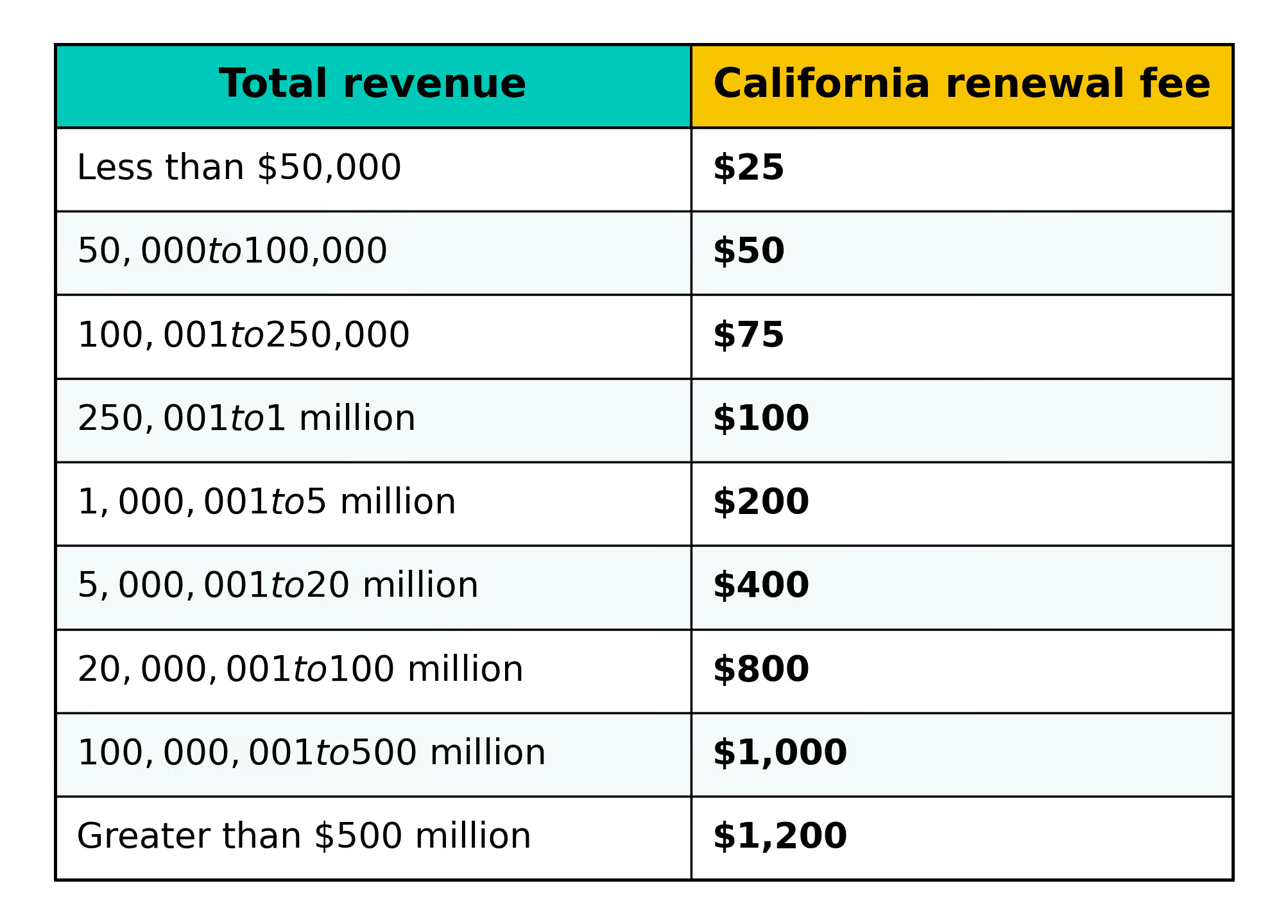
This means your total cost depends on whether you are completing an initial registration or renewal and, for renewals, your organization’s total revenue.
What to expect when you file through Change
When you begin filing through the Give Lively + Change experience, you create a Change account and begin the California charitable registration questionnaire (Step 1).
The questionnaire is designed to collect what’s needed to determine whether your organization is completing an initial registration or a renewal. You may be asked for basic organization, financial and leadership information, as well as documents related to your nonprofit’s status.
Where possible, Change can help reduce manual data entry by using publicly available details pulled from your organization’s IRS Form 990 to help populate required filing fields. You still have visibility into what is being submitted and can review everything before the filing moves forward.
After the questionnaire is complete, Change prepares the filing materials and checks for missing or incomplete information (Step 2). If something needs clarification, you are prompted to address it. From there, Change manages the filing workflow and provides status updates so your team can understand where things stand.
The goal is to make California compliance easier to complete and easier to track.
What documentation should you have ready?
Before starting, it helps to gather common documents and details. Requirements may vary depending on whether your organization is filing an initial registration or a renewal, but you may need:
- Your nonprofit’s legal name, EIN and mailing address
- Formation documents, such as articles of incorporation
- IRS determination letter
- Most recent IRS Form 990
- Financial information, including total revenue
- Names and particulars for officers, directors or trustees
California renewal fees are based on total revenue, so having accurate financial information ready can make the process smoother. The Change filing experience guides you through what is needed.
Ready to start your registration?
Remember: if your nonprofit fundraises in California, receives donations from California supporters or uses online platforms that reach California donors, now is a good time to review your registration status.
Give Lively + Change makes it easier to complete or renew California charitable registration through a guided filing experience.
Start Your California Registration with Change
California charitable registration does not have to become a major administrative burden. With the right process, your organization can maintain good standing, keep fundraising channels open and continue building donor support with confidence.
This guest blog post was prepared in collaboration with the Change team.
%201.svg)