How to ask for donations for your nonprofit

.svg)
.svg)
.svg)
.svg)

For some nonprofit leaders, the “ask” – the request for a donation – is one of the most nerve-wracking parts of the job. The mission is clear, the need is real; however, there’s serious hesitation about soliciting funds.
This moment’s pause is worth examining because it often rests on a flawed understanding of the situation. Instead of being a hardship, a donation request should be an invitation, an opening for someone who cares about a cause to act on it. Most people want to show support in a concrete way. They just need context and a clear opportunity to connect to something they already value.
How to ask for donations for your nonprofit: 6 tips
The work of a good “ask” is to provide context and opportunity. The tips below address how to do it well and flag a few common ways organizations get in their own way.
1. Be specific about the amount, the need and the impact
Vague donation appeals consistently underperform specific ones. A concrete “ask” gives donors something to react to; a general one leaves them without a clear path for action. For example, “Will you support our work?” proposes nothing in particular, while “$50 covers a full month of after-school transportation for one student” requests something precise and signals that the organization knows exactly where its money goes.
One time-tested “ask” formula combines three elements:
- a specific dollar amount: this removes ambiguity about what’s being solicited and calls on the donor to make a decision rather than answer a question
- the need it addresses: this grounds the “ask” in operational reality and shows that the organization has thought carefully about how funds are used
- the tangible outcome it enables: this connects the gift to something the donor can picture, such as a person helped, a program sustained or a goal within reach.
When prior giving data is available, calibrate the “ask” amount to what a donor has contributed before. Use the previous donation as a natural baseline or a springboard for more precise requests.
2. Make the protagonist the donor, not the organization
A great many donation appeals center the organization, highlighting its history, its programs, its accomplishments and/or its goal.
A more effective approach activates the donor. A plea framed around what a donor makes possible leverages more powerful motivations than reports of organizational accomplishment. Donors give to outcomes they want to be part of, like providing a family with access to stable housing for the first time. Position prospective supporters as the cause of impact underscore that reality.
This framing holds true even for missions without an obvious beneficiary story. Arts organizations, environmental research groups and advocacy nonprofits may not be able to point to a single person whose life changed, but the donor-as-protagonist logic still applies. The donor becomes the reason a body of research continues, a community institution survives or a policy campaign has the resources to finish what it started.
3. Match the “ask” to the relationship
Channel, tone and donation amount should reflect where a donor stands in relationship with the organization. A lapsed donor requires a different message than someone who signed up for a newsletter the previous month. Treating all potential donors the same way is a very common missed opportunity in nonprofit fundraising.
Before any campaign, basic segmentation makes a meaningful difference. At a minimum, separating contacts into distinct categories allows for outreach that feels relevant rather than generic.
- Active donors: gave recently and have an established relationship with the organization; the “ask” can reference their history and build on it.
- Lapsed donors: gave in the past but have gone quiet; the priority is reconnection before the “ask,” not leading with it.
- New subscribers or prospects: have expressed interest but not yet given, as they need more context and maybe a lower-stakes entry point.
- Recurring donors: have made an ongoing commitment and need the most personalized, relationship-forward communication of any group.
4. Make the giving experience as easy as possible
A well-crafted “ask” can still fall short if the giving experience creates friction.
Once a donor decides to give, every unnecessary step between that decision and a completed gift is an excuse for them to reconsider, get distracted or simply give up, especially on mobile devices, where a growing share of online donations now originates.
Before any campaign goes out, make sure the fundraising page loads quickly, works on a phone and can be reached directly from the appeal. A prompt confirmation/thank-you message or email closes the immediate loop and reassures the donor that a contribution landed.
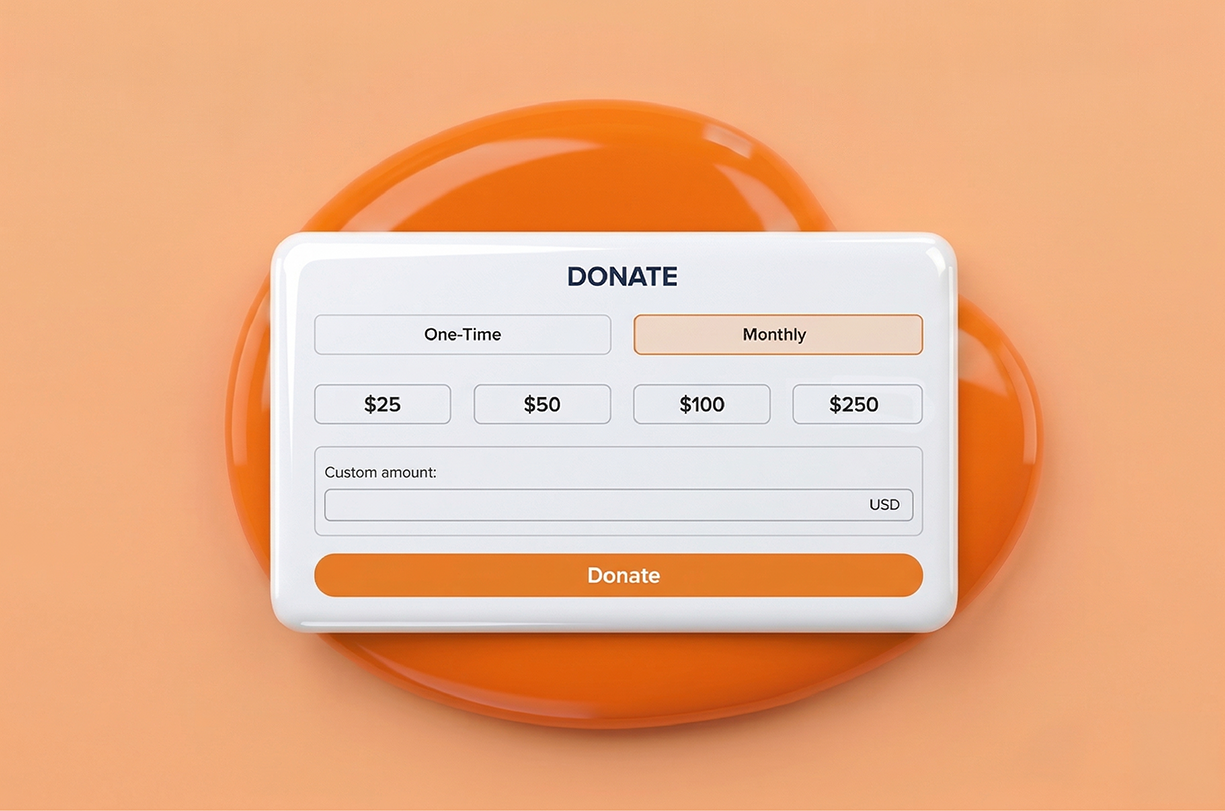
Payment flexibility matters too. Donors have preferences and an organization that accepts only one or two payment methods might lose gifts to avoidable friction. A range of payment options, including recurring giving, should be clearly visible to increase both conversion and average gift size over time.
5. Know when not to ask
Organizations should develop guidance on when to hold back, which is among the least-discussed scenarios in standard fundraising advice. The relationship a nonprofit builds with its donors has a long arc and over-solicitation compresses it.
“Ask” fatigue is real. Donors who feel pressured might quietly disengage, opening fewer emails, ignoring appeals and eventually lapsing. The goodwill an organization accumulates through its work and communications is like a savings account that gets drawn from each time an “ask” is made. Making requests too frequently, especially without delivering value in between, depletes that account.
Consider a few situations when a donor might need space.
- A donor who gave recently and has just received an acknowledgment: an immediate fundraising follow-up risks undermining the goodwill just built.
- A new subscriber: someone who has just received a welcome sequence might not yet have enough familiarity with the organization to be ready for a campaign push.
- A donor who has already received multiple requests in a single year: a natural ceiling has likely been reached for that cycle.
While monitoring campaign outreach might feel like unproductive restraint, it’s actually an exercise in recognizing when it’s more productive to send impact updates and targeted acknowledgments to keep donors connected with why they gave in the first place.
6. Treat the thank-you as the beginning, not the end
Some organizations treat donor acknowledgment as the end of the giving cycle, a tidy knot once a receipt goes out. However, the thank-you is where the relationship actually starts to develop.
A prompt acknowledgment, ideally within 24 to 48 hours, is really just a basic courtesy, a signal that the organization is attentive. What follows is stewardship – an expansion of the relationship.
After a donation, an impact update shows what the donation actually accomplished and, as a next step, might do more to prepare a donor for their next gift, because it answers the question a donor is always implicitly asking: Did my contribution do what I hoped it would?
Well-timed stewardship outperforms generic appeals sent to cold lists, and it doesn’t require a large team or elaborate systems. A short email is often enough to showcase a concrete outcome with a photo from a program or a note from someone served.
Recurring donors and major donors warrant more individualized follow-up than one-time givers, but across all giving levels, the underlying principle holds: the thank-you opens the next giving cycle.
(Learn about how to build donor relationships that actually last through our free on-demand From Transactions to Trust webinar and Practical Guide to Donor Connection, a companion playbook with easy templates and plug-and-play language for human-first fundraising. Get instant access here.)
Build the infrastructure to support your "asks" with Give Lively
Effective donation “asks” depend, in part, on a quality fundraising flow. Give Lively’s free fundraising platform includes speedy, frictionless and secure fundraising pages with full features, such as recurring giving, campaign-level donation data in real time, automatic tax receipts and integrations with Salesforce and Zapier, keeping the operational side of fundraising in step with the relationship work.
Learn more about Give Lively’s nonprofit fundraising platform today. Ready to see how Give Lively can support your “asks”? Sign up for a demo.
%201.svg)