Leveraging trust through peer-to-peer fundraising

.svg)
.svg)
.svg)
.svg)

With confidence in public institutions in decline, nonprofits are stepping up more and more to deliver essential services. This is making traditional fundraising more critical, but harder than ever; many nonprofits are struggling to break through the doubt and the noise. Many are also discovering that, in today's trust-based economy, their most valuable currency may be their social capital, not endowments or donor databases.
Enter peer-to-peer fundraising (P2P fundraising): a strategy that shifts the request for philanthropic support from an organization to a friend. By utilizing peer-to-peer fundraising platforms, nonprofits transform their most passionate supporters into force multipliers, easing the burden on overwhelmed development officers. Instead of trying to reach 100 strangers, they can use P2P to empower 10 super-fans to connect with 10 friends each.
And it’s working. Even in this era of guarded optimism, P2P fundraising is seeing success because it leverages social trust; a potential donor is much more likely to give when the request comes from a friend, rather than a brand.
The case for peer-to-peer fundraising
The data behind P2P fundraising is pretty clear. P2P fundraising is one of the most efficient ways to grow a nonprofit’s financial base, particularly for lean teams.
- Friends matter: 39% of donors give because they were approached by a friend or family member.
- New donors: 77% of donors who give through a P2P campaign are new to the organization, versus 56% for traditional campaigns.
- Generational engagement: Gen Z and Millennials are 2.7 times more likely to be P2P fundraisers than older generations.
- Return on investment: For every $1 spent on P2P management, nonprofits typically see a $2 to $4 return.
How to prepare for peer-to-peer fundraising
Although P2P fundraising relies on decentralized action, it still requires centralized management. Before recruiting fundraisers, nonprofits must make important decisions and build strong foundational anchors.
Choose a style
Nonprofits decide the kind of campaign that will best serve their mission goals and their community’s capabilities. Campaigns can be time-based (tied to a specific event), rolling (ongoing) or positioned around a recognized day such as GivingTuesday.
Optimize a keystone page
Individual P2P fundraising pages often inherit details from a “parent" campaign page. This mainstay page must be visually compelling, feature a clear logo, have recognizable brand colors and sport imagery that evokes the nonprofit’s mission.
Recruit and support peer-to-peer champions
A good pool of strong P2P fundraisers is board members, volunteers and repeat donors. They already know the mission; they just need to know how to be a P2P fundraiser. They can be helped with a ready-made P2P fundraising toolkit that includes high-res photos, short campaign descriptions and email/text templates that can be copied, pasted and personalized.
How to coach for impact
A nonprofit's P2P champions are always passionate, but, to begin with, they aren't necessarily professional fundraisers. They have hesitations about how to reach out and what language to use. They often fear bothering their network. The goal is to set aside their doubts and spur them on with a success mindset.
Personal has more oomph than professional
The most meaningful and effective P2P fundraising pages are the ones with the most heart, not the most polished prose and posed pictures.
P2P fundraisers should be reminded:
- "Your face, not our logo": a profile picture of the fundraiser increases trust and conversions.
- "Your ‘why,’ not our ‘what’": a personal story about why the nonprofit’s mission matters and why the fundraiser cares always carries more weight than the nonprofit’s mission copy.
- Lead by example: a page with $0 is harder to give to than one with existing momentum, so the fundraiser should consider making the first donation.
Give Lively’s peer-to-peer products
Give Lively offers a comprehensive, integrated ecosystem of fundraising products (all free for nonprofits) that can be used by themselves or in conjunction with one another. Three of them combine to form a powerful peer-to-peer fundraising solution.
- Individual P2P Fundraising pages: One person, one page, one goal. Supporters create a personalized page backing a nonprofit’s campaign to share with their own networks. These individual pages carry the supporter’s name, image and direct appeal, but also include references to the nonprofit and borrow from its branding.
- Team Fundraising: Coworkers, families or friends collaborate on a shared goal. Teams raise an average of 10 times more than individual participants.
- Leaderboard: An added element that gamifies the fundraising experience, highlighting top performers and driving friendly, healthy competition.
Nonprofits use these tools to capture community fervor without the overhead of expensive software or a multi-person marketing team.
How to empower advocates in real time
One important element of what Give Lively offers nonprofits is the autonomy it grants to P2P fundraisers. Because these super-supporters serve as volunteer advocates, they need tools to manage their efforts without the constant oversight of nonprofit staff. The Give Lively User Portal is the command center for this autonomy.
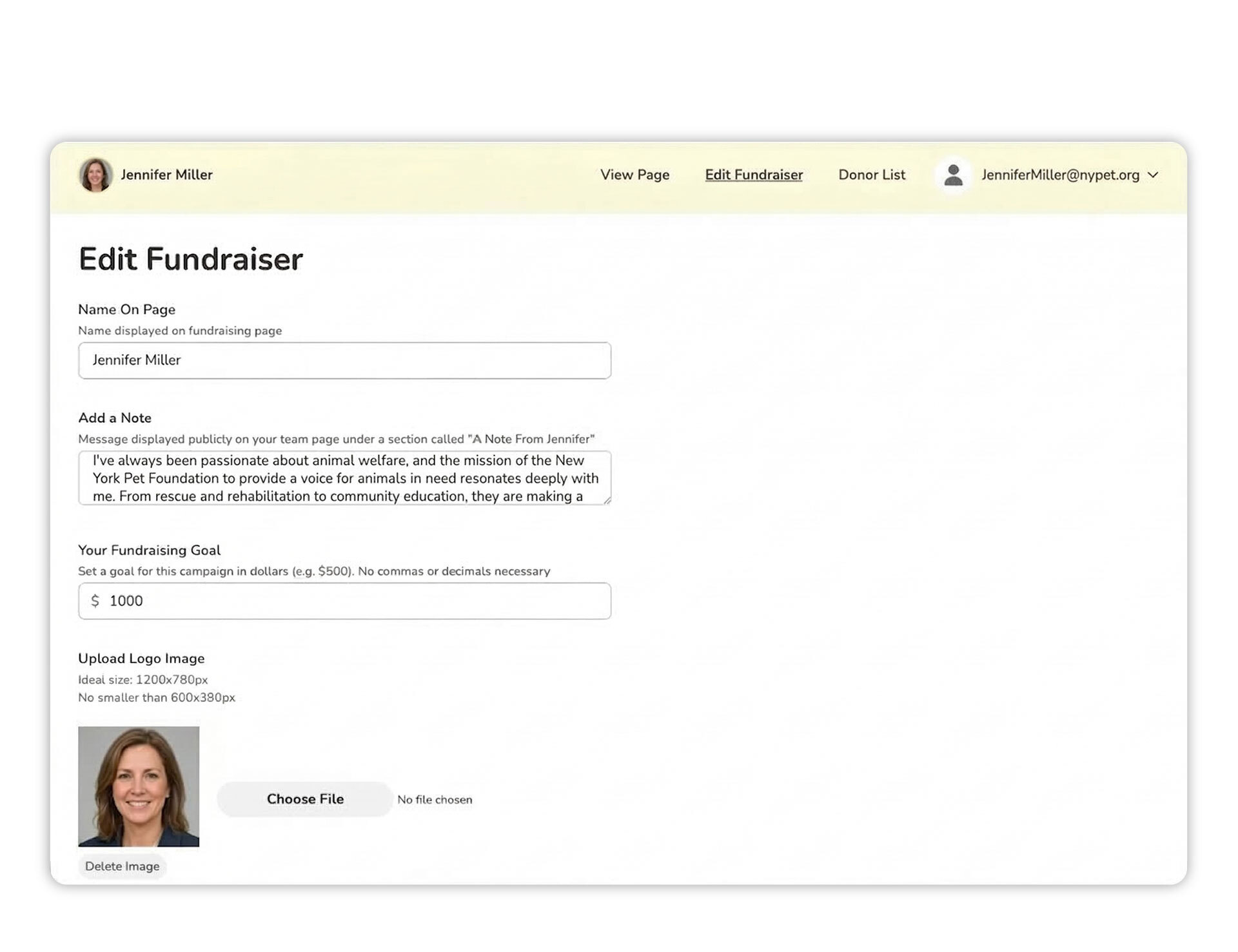
Everyone who makes a payment through Give Lively technology gains access to the User Portal. But when a supporter becomes a P2P fundraiser, a new layer of the portal becomes useful – the personal interface that allows them to own their P2P narrative. This kind of decentralized management is vital for maintaining the trust that keeps fundraisers in the driver's seat of their personal brand.
The Give Lively User Portal experience
Through the User Portal, fundraisers have access to:
- Appeal customization: Fundraisers can edit their P2bP fundraising page – their name, profile picture, personal story and fundraising goal at any time. If they hit their goal early, they can increase it to keep the momentum going.
- Visual storytelling: The portal allows for the uploading of a profile photo and other images, ensuring the page looks like a personal recommendation rather than a branded ad.
- Team dynamics: Fundraisers can set up a team, join an existing team or move between them, which encourages community without nonprofit intervention.
Peer-to-peer donor review
The most impactful evolution of the User Portal is the real-time donor review feature. This allows fundraisers to see who has donated and how much they gave – an alert for every win.
In the world of social trust, where timing carries weight, this level of review enables fundraisers to personally acknowledge and thank their donors with no delay, reinforcing the relationship. (This can happen in addition to the automated thank-you/receipt email sent by Give Lively on behalf of the nonprofit.)
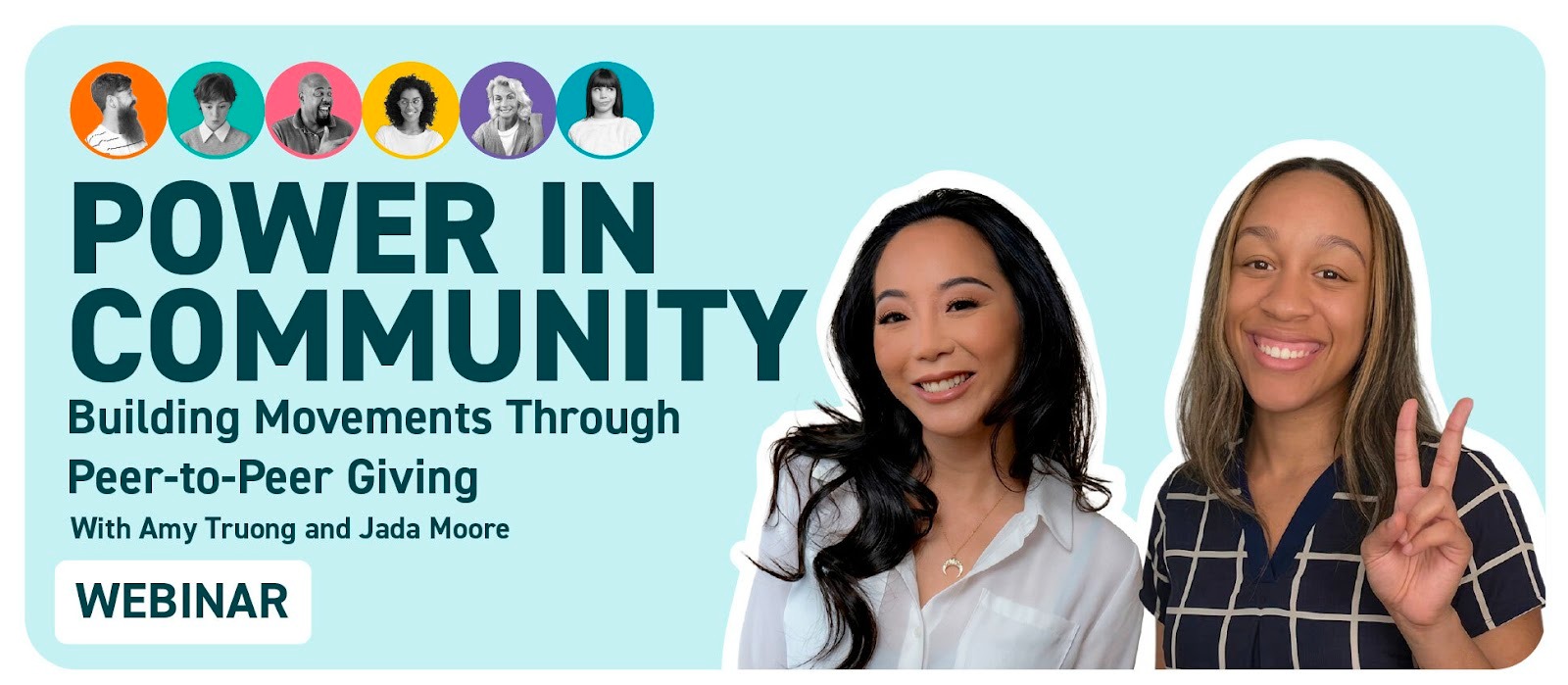
On-demand webinar: learn about building movements through P2P giving
In this webinar replay, Amy Truong, Give Lively's Member Success & Growth Lead, and Jada Moore, Give Lively's Senior Solutions Architect, walk you through the nuts and bolts of building a peer-to-peer fundraising strategy that actually moves the needle.
They cover:
- Getting started: How to structure a peer-to-peer campaign for your specific goals, whether you're running a time-bound fundraising drive, a community challenge or an ongoing awareness effort
- Motivating your fundraisers: The tactics and tools that keep individual fundraisers engaged, from leaderboards and team goals to personalized thank-you notes and real-time progress tracking
- Making it scalable: How to manage peer-to-peer campaigns without overwhelming your staff, including how Give Lively's Peer-Based Fundraising solution handles the heavy lifting automatically
- Turning participants into long-term supporters: How to nurture the relationships you build through peer-to-peer campaigns so that first-time fundraisers become loyal advocates year after year.
If you've been curious about peer-to-peer fundraising but weren't sure where to start, or if you've tried it before and want to do it better, this webinar is for you.
A potent call to collective action
Whatever happens, don’t set up P2P and then forget it. P2P fundraising should be about active partnership. When a campaign ends, recognize fundraisers as heroes. They didn't just give money; they gave their reputation and their voice. Leverage Give Lively’s P2P tools and the intuitive User Portal to create a movement based on trust, something far more valuable than just raising funds.
Nonprofit fundraising is never a solo act. It’s about harnessing the power of many, a form of collective action, which has a long and potent legacy. Treat donors as community activists and honored messengers, not just sources of capital, and elevate single-campaign fundraising into a movement.
%201.svg)